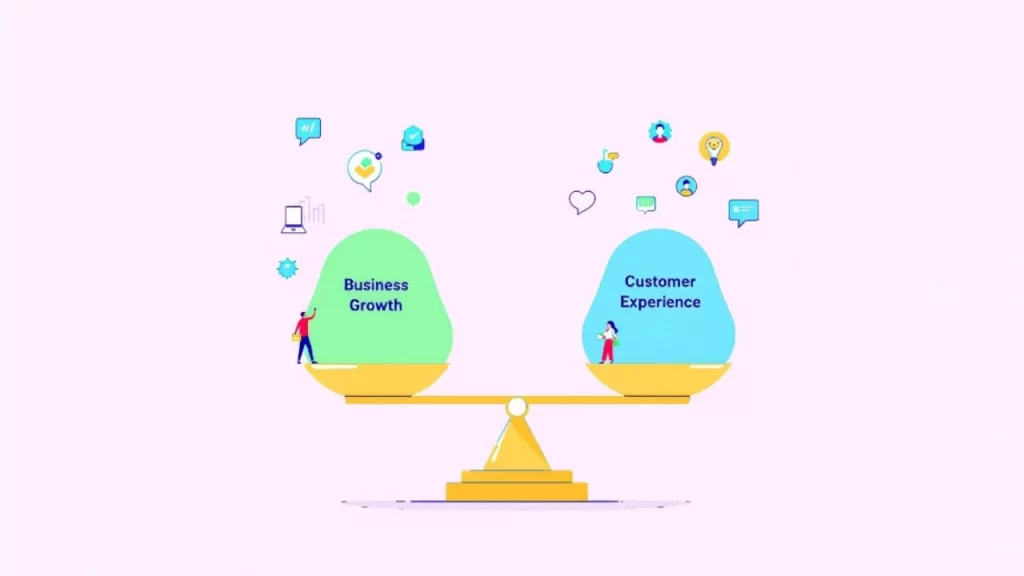
Scaling a business is a double-edged sword.
- 89% of companies lose customers during rapid growth (Harvard Business Review)
- Scaling poorly can damage your reputation faster than any marketing can fix it
- Yet, companies that scale smartly see 2-3x higher customer lifetime value (McKinsey)
The challenge? Growing without losing what made you successful in the first place—personalized service, quality, and trust.
This article reveals a customer-centric scaling playbook used by brands like Zappos and Slack to expand while keeping satisfaction scores high.
Table of Contents
ToggleWhy Most Companies Fail at Scaling Customer Experience
The 3 Deadly Scaling Mistakes
- Automating too soon (losing human connection)
- Hiring for speed over culture fit (eroding service quality)
- Standardizing what should stay personalized (turning loyal customers into numbers)
Case Study: A SaaS company grew 5x in a year—but their CSAT score dropped 40% because they:
- Replaced 1:1 onboarding with pre-recorded videos
- Outsourced support to unprepared teams
- Stopped collecting customer feedback
The Customer-Centric Scaling Framework
1. Build Scalable Personalization
- AI + human hybrid models: Chatbots handle 60% of queries; humans take complex issues
- Customer segmentation: Tier your service (e.g., VIPs get dedicated managers)
- Proactive outreach: Use CRM data to anticipate needs before they arise
Example: Amazon’s “anticipatory shipping” patents show they ship products before you order—based on your habits.
2. Scale Your Team Without Losing Culture
- Hiring hack: Include customer service trials in interviews (e.g., “Handle this mock complaint”)
- Culture carriers: Identify 3 employees who embody your values—make them trainers
- Document rituals: Create a “Culture Code” handbook with service non-negotiables
Zappos Wisdom: New hires get $3,000 to quit after training—only those committed to service stay.
3. Systemize What Matters
| What to Standardize | What to Keep Flexible |
|---|---|
| Response time SLAs | Communication tone |
| Quality control checks | Solution creativity |
| Data collection | Empathy moments |
4. Leverage Technology Thoughtfully
- CX Tech Stack Essentials:
- Helpdesk software (Zendesk, Freshdesk)
- Customer sentiment analysis (Gong, Chorus)
- Knowledge base (Document360, Helpjuice)
Warning: Don’t automate until you’ve mastered the manual process first.
Early Warning Signs You’re Sacrificing CX for Growth
🚩 Customers mention “it used to be better”
🚩 Employee turnover increases in customer-facing roles
🚩 Same complaint appears in 5+ reviews
🚩 Response times slip by more than 20%
Diagnostic Tool: Track Customer Effort Score (CES)—how easy it is to get issues resolved.
Companies That Scaled CX Successfully
1. Slack’s Onboarding Evolution
- Early days: CEO Stewart Butterfield personally onboarded users
- At scale: Created interactive product tours that feel human
- Result: 90% retention rate for teams that complete onboarding
2. Lululemon’s Educator Model
- Staff (“educators”) get 300+ hours of training before floor time
- Even during 20% YOY growth, NPS scores remain sky-high
3. Airbnb’s “Belong Anywhere” Scaling
- Standardized property photos/vetting without losing local charm
- Hosts still write personalized welcome guides
The Scaling-CX Balancing Act
When to Invest Ahead of Demand
✅ Customer support staff
✅ Server capacity
✅ Fraud prevention
When to Wait for Proof of Need
❌ Over-customization
❌ Niche features
❌ Expensive packaging
FAQs About Scaling & Customer Experience
How do you maintain personalization at scale?
Use dynamic content (emails with first names + purchase history) and segment by behavior.
What’s the ideal support team ratio during growth?
1 rep per $1M in revenue (early stage) → 1 per $2.5M (at scale with automation).
Should you raise prices to fund better CX?
Yes—if you tie it to measurable CX improvements (faster shipping, extended support).
How often should you survey customers during scaling?
Monthly for fast-growth phases, quarterly for steady scaling.
Can you recover from CX damage during scaling?
Yes—publicly acknowledge slips and over-deliver on fixes (see JetBlue’s comeback).
Key Takeaway
Scaling isn’t about getting bigger—it’s about getting better at being bigger.
Your 3-Step Scaling Prep Today:
- Audit one customer touchpoint (e.g., onboarding emails)
- Identify one automatable task (freeing time for human connection)
- Survey 10 customers about what they’d hate to see change
The companies that dominate their industries don’t just scale fast—they scale right. Will yours?
(Internal links: Best CRM Tools, How to Calculate Customer Lifetime Value | External links: Harvard Business Review Scaling Study, Zappos Culture Code)