We are living in a time where technology evolves faster than businesses can adapt. Every industry—healthcare, finance, retail, logistics, education, entertainment—is experiencing massive transformation driven by digital innovation. What used to take a decade now changes in months.
For innovators, entrepreneurs, and decision-makers, the real challenge is understanding not only what technologies are disrupting industries, but also how to leverage them for long-term success.
This article explores the major technology disruptions, their real-world impacts, and key insights innovators must adopt to thrive in 2026 and beyond.
Table of Contents
ToggleUnderstanding Technology Disruption: What Does It Really Mean?
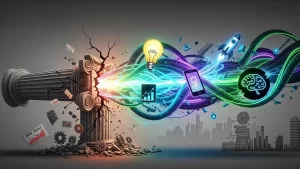
Technology disruption happens when a new digital solution or model completely changes how an industry operates.
Core elements of disruption include:
- Eliminating outdated business models
- Automating manual processes
- Enhancing customer experience
- Creating entirely new revenue streams
- Shifting consumer expectations
- Introducing speed, efficiency, and personalization
From AI tools to blockchain, from automation to metaverse commerce—disruption doesn’t wait. Industries must evolve or risk becoming irrelevant.
Artificial Intelligence: The Leading Force Behind Modern Disruption
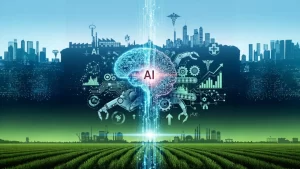
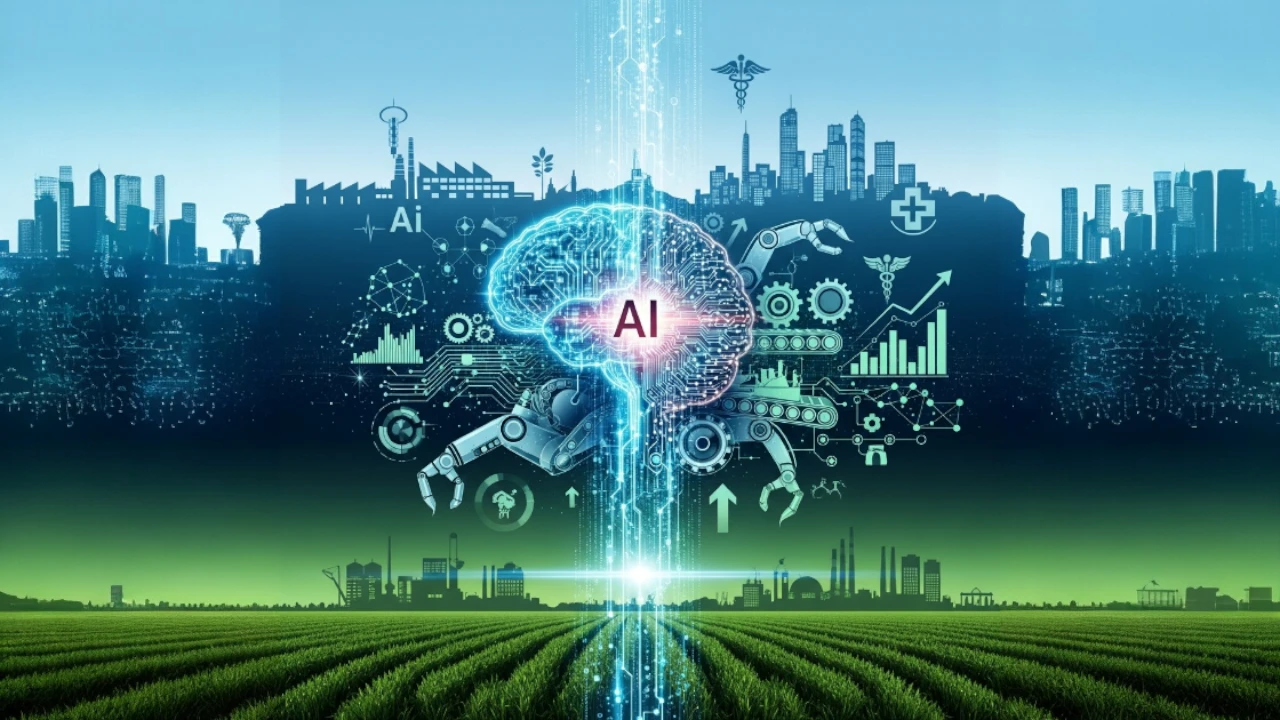
AI is reshaping industries at a historic pace. Innovators consider AI not just a tool—but a core infrastructure of the future.
AI Applications Fueling Transformation
- Predictive analytics for better decision-making
- AI-powered customer support
- Automated content creation
- Fraud detection in banking
- Personalized product recommendations in retail
- AI-driven medical diagnoses
Why AI Matters for Innovators
AI enables faster scaling, deeper personalization, and smart automation. Businesses that integrate AI early gain a long-term competitive advantage.
Automation & Robotics: Replacing Repetition With Intelligent Efficiency
Automation is revolutionizing industries by removing repetitive tasks and allowing teams to focus on innovation.
Examples of Automation in Modern Industries
- Manufacturing robots increase precision
- Chatbots reduce support costs
- Automated warehouses speed supply chain processes
- Self-driving tech reshaping logistics
- Auto-billing systems improving finance operations
Industry Impact
Companies report 40–60% increased efficiency after adopting automation tools.
For innovators, automation is no longer optional—it’s foundational.
Blockchain & Web3: The Future of Trust, Security, and Decentralization
Blockchain is redefining how industries manage data, security, and value exchange.
Key Disruptions From Blockchain
- Secure digital transactions
- Smart contracts reducing fraud
- Transparent supply chain tracking
- Decentralized finance (DeFi)
- Identity protection systems
Industries Most Impacted
- Finance
- Logistics
- Real estate
- Healthcare
- Digital media
Innovators must understand blockchain beyond cryptocurrency—it is the new backbone of digital trust.
The Rise of Digital-First Consumers: Changing Expectations Everywhere
Technology disruption isn’t just about tools—it’s about people.
Modern Consumers Expect:
- Faster service
- Personalization
- Mobile-first experiences
- Transparent communication
- Subscription-based solutions
- Convenient online access
Industries must redesign user experiences around real-time digital interactions.
The customer now leads the innovation—not the other way around.
E-Commerce & Digital Payment Systems: Transforming Buying and Selling
Online shopping isn’t just a trend—it’s the default. With digital wallets, QR payments, and global e-commerce platforms, buying habits have changed forever.
Key Changes
- Cashless transactions becoming standard
- Social commerce growing rapidly
- AI-driven product recommendations
- Faster delivery through automated logistics
Impact on Businesses
Offline-only companies risk losing relevance unless they adopt a hybrid digital strategy.
Big Data & Predictive Analytics: The New Competitive Weapon
Data is the new business currency. Companies using data analytics outperform competitors by predicting trends before they happen.
Benefits for Innovators
- Understand customer behavior
- Improve product development
- Reduce operational waste
- Forecast demand accurately
- Optimize marketing strategies
Data-driven decisions create future-proof business models.
Cloud Computing: The Invisible Engine Behind Modern Disruption
Cloud technology allows businesses to operate with flexibility, scale, and global access.
Why Cloud Matters
- Reduces infrastructure costs
- Enables remote work
- Strengthens data storage
- Supports automation and AI tools
- Helps teams collaborate faster
Cloud-first companies grow 2X faster than traditional infrastructure users.
The Metaverse, AR, and VR: Creating New Digital Experiences
Virtual reality (VR), augmented reality (AR), and metaverse environments are reshaping entertainment, education, and workplace systems.
Examples of Real-World Uses
- AR-powered retail try-ons
- VR fitness and training platforms
- Virtual classrooms and offices
- Immersive gaming economies
- Digital real estate and events
Innovators must explore these technologies to build next-gen customer experiences.
Cybersecurity: The Most Critical Pillar of Digital Transformation
As industries go digital, cyber threats grow stronger.
Major Cyber Threats Today
- Data breaches
- Ransomware attacks
- Identity theft
- Financial fraud
- Cloud vulnerabilities
Why Innovators Must Prioritize Security
Without strong cybersecurity, digital innovation collapses. Security is not a cost—it’s a strategic investment.
Workplace Digitalization: The New Era of Productivity
Remote and hybrid work reshaped the modern workforce.
Digital Tools Enhancing Workplaces
- Virtual meeting platforms
- AI project management tools
- Team collaboration apps
- Cloud-based document sharing
- Automated HR systems
Companies investing in digital workplace tools experience higher productivity, reduced costs, and happier teams.
Internal Link Suggestions
(You can connect these with relevant articles on your site.)
- “Top Fitness Technology Trends of 2026”
- “How the Digital Economy Is Reshaping Global Business”
- “AI Tools Every Entrepreneur Should Know”
External Authoritative Sources (For E-E-A-T Support)
- World Economic Forum (Future of Jobs Report)
- Harvard Business Review
- McKinsey Technology Insights
- MIT Technology Review
FAQs (Not Repeated From Headings)
Q: What industries are being disrupted the fastest?
Finance, retail, healthcare, education, and logistics are seeing the fastest digital transformation.
Q: How can small businesses keep up with rapid technology changes?
Start small—use cloud tools, automation, and digital marketing before adopting advanced technologies.
Q: Does technology disruption destroy jobs?
It shifts roles. Low-skill jobs reduce while high-skill tech roles grow rapidly.
Q: What skills do innovators need in this era?
AI literacy, digital strategy, data understanding, communication, and adaptability.
Q: How can companies prepare for future disruptions?
Invest in innovation, train employees, adopt flexible systems, and monitor tech trends.
Conclusion: Innovators Who Adapt Will Lead the Future
Technology disruption is not slowing down—it’s accelerating. Industries that embrace innovation become leaders, while those resisting change fall behind. Whether it’s AI, blockchain, automation, or digital-first consumer behavior, the future belongs to those willing to adapt, experiment, and evolve.
If you’re an innovator or entrepreneur, now is the perfect time to embrace these transformative technologies and position yourself at the forefront of the future.