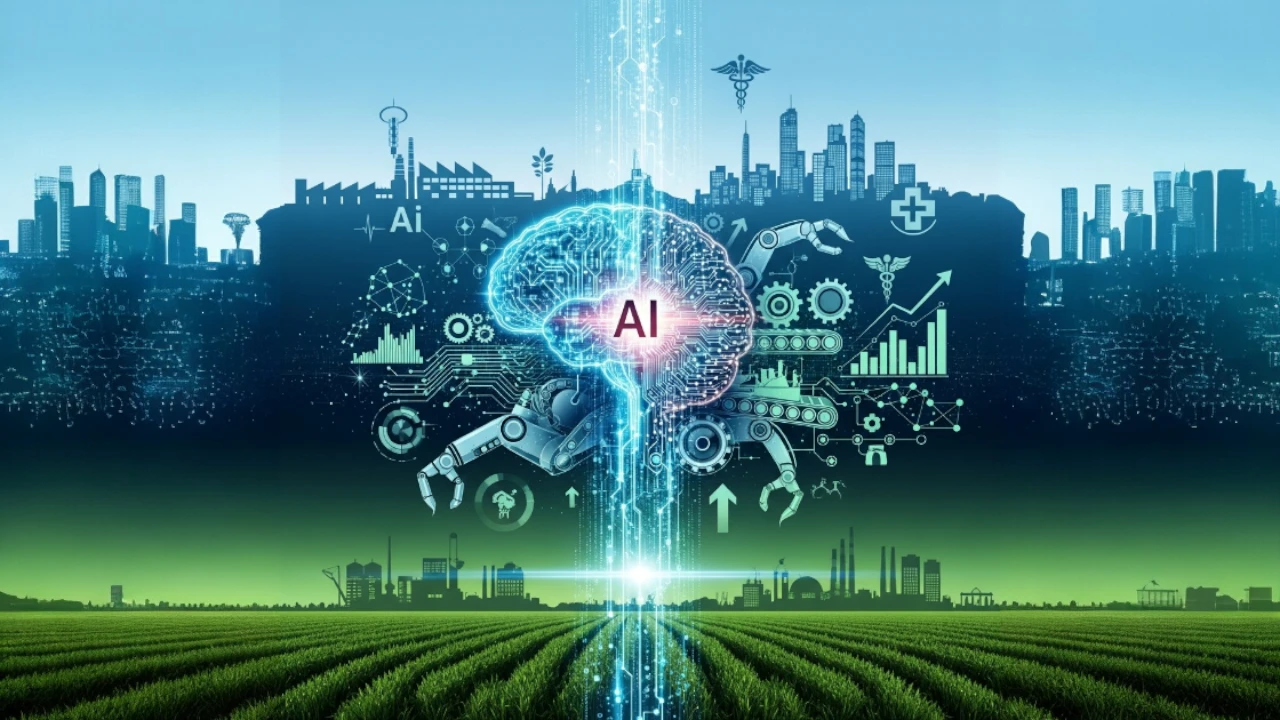
Artificial Intelligence (AI) is transforming how businesses operate. From customer service to data analysis, automation is reshaping industries, increasing efficiency, and reducing costs. This article explores how AI is changing the business landscape, why it matters, and how companies can adapt to stay competitive in the digital era.
Table of Contents
ToggleThe Rise of AI in Modern Business
We’re living in a time when machines can think, learn, and make decisions — and it’s transforming everything we know about work.
What started as simple automation (like chatbots or spreadsheets) has evolved into AI-driven systems that can analyze complex data, predict trends, and make accurate decisions in seconds.
From startups to global corporations, AI is no longer optional — it’s essential. Businesses that adapt are growing faster, cutting costs, and outpacing competitors who resist change.
Let’s explore exactly how automation is redefining the business landscape — and what it means for your company’s future.
How AI Is Revolutionizing Business Operations
1. Smarter Decision-Making Through Data
In the digital age, data is the new currency — but only if you know how to use it.
AI analyzes massive datasets in seconds, uncovering insights that humans might miss.
For example:
- Retailers predict customer buying behavior.
- Banks detect fraud instantly.
- Healthcare providers identify risks before symptoms appear.
🔍 Fact: 77% of top-performing businesses use AI for real-time analytics and decision-making.
AI turns guesswork into precision — helping leaders make smarter, faster, and more profitable decisions.
2. Automating Repetitive Tasks
Before AI, employees wasted hours on manual, repetitive tasks — data entry, report generation, email responses, scheduling.
Now, AI-powered automation tools handle them effortlessly.
This shift allows teams to focus on strategic, creative, and human-centric work that drives real business growth.
💡 Example Tools:
- Zapier for workflow automation
- UiPath and Blue Prism for robotic process automation (RPA)
- ChatGPT and Jasper for content generation
Automation doesn’t replace jobs — it enhances productivity and helps humans work smarter.
3. Transforming Customer Experience
Customer expectations are higher than ever — and AI is meeting them.
With AI chatbots, predictive support, and personalized recommendations, businesses now provide 24/7 customer service that feels human.
For example:
- Amazon uses AI to predict what customers want before they know it.
- Netflix personalizes your homepage with data-driven precision.
- Sephora uses AI-powered virtual assistants to help users pick the perfect product.
Result? Happier customers, higher retention, and bigger profits.
4. Redefining Marketing and Sales
AI has become the secret weapon behind high-performing marketing campaigns.
It helps businesses:
✅ Target the right audience with precision
✅ Automate email and ad campaigns
✅ Optimize budgets based on real-time data
✅ Predict which leads are most likely to convert
📊 Example: Google Ads’ Smart Bidding uses machine learning to automatically adjust bids for maximum ROI.
AI marketing tools like HubSpot, Marketo, and Persado are helping brands scale faster and smarter than ever before.
5. Revolutionizing HR and Recruitment
Hiring the right talent used to take weeks. Now, AI can filter thousands of resumes in seconds.
AI-powered recruitment platforms like HireVue and LinkedIn Talent Insights evaluate candidates based on skills, experience, and even soft-skill indicators — all while reducing human bias.
In HR, automation helps with:
- Employee onboarding
- Performance tracking
- Predicting retention rates
This creates a more efficient, data-driven, and inclusive workplace.
6. Optimizing Supply Chains
AI is a game changer for logistics and manufacturing.
From predicting demand to managing inventory and transportation routes, AI ensures that goods move efficiently from production to customer.
🚚 Example:
- UPS uses AI to optimize delivery routes, saving millions in fuel costs annually.
- Tesla uses predictive analytics to enhance supply chain resilience and avoid shortages.
AI in logistics means fewer delays, lower costs, and faster deliveries — a win for both businesses and customers.
7. Enhancing Cybersecurity
As businesses digitize, cyber threats rise.
AI-powered cybersecurity systems can detect and stop attacks before they cause damage.
🔐 AI does this by:
- Monitoring traffic patterns
- Detecting anomalies
- Identifying suspicious behavior in real-time
Platforms like Darktrace and CrowdStrike use machine learning to evolve continuously — making your defense smarter every day.
AI and the Human Workforce: Friend or Foe?
One of the biggest debates in business today is whether AI will replace human jobs.
The truth? AI replaces tasks, not people.
While automation handles repetitive or data-heavy work, humans still lead in:
💬 Creativity
💡 Emotional intelligence
🤝 Relationship-building
🧠 Strategic thinking
The key is collaboration between humans and machines.
Those who adapt — learning to use AI tools effectively — will become 10x more valuable in the job market.
The Financial Impact: Lower Costs, Higher Profits
AI doesn’t just save time — it saves and makes money.
Here’s how businesses benefit financially:
- Reduced labor costs through automation
- Faster decision-making = higher ROI
- Improved accuracy = fewer costly errors
- Better customer retention = higher revenue
💰 According to PwC, AI could contribute over $15 trillion to the global economy by 2030.
Businesses that invest now are positioning themselves for exponential growth.
Industries Being Transformed by AI
AI’s impact spans across industries — no sector is untouched.
1. Healthcare
- AI detects diseases earlier and improves diagnostics.
- Predictive algorithms personalize treatment plans.
- Robotics assist surgeons with precision.
🧬 Example: IBM Watson Health analyzes complex medical data faster than any doctor can.
2. Finance
- AI fights fraud and automates trading.
- Robo-advisors create personalized investment plans.
- Chatbots offer instant customer support.
🏦 Example: JPMorgan Chase’s AI system reviews legal documents in seconds — saving 360,000 hours of work per year.
3. Retail and E-commerce
- Personalized recommendations increase sales.
- Inventory management becomes smarter and leaner.
- Dynamic pricing adjusts instantly to demand.
🛒 Example: Walmart uses AI to restock shelves automatically and predict future demand.
4. Manufacturing
- Smart factories run with minimal human intervention.
- Predictive maintenance prevents costly downtime.
- Robots handle repetitive assembly tasks with precision.
🏭 Example: Siemens uses AI to monitor factory performance in real time — boosting productivity by 20%.
5. Real Estate
- AI predicts property value changes.
- Chatbots assist with buyer inquiries 24/7.
- Virtual reality and AI combine for immersive property tours.
🏡 Example: Zillow’s AI algorithm estimates home values for millions of listings daily.
Challenges and Ethical Considerations
With great power comes great responsibility — and AI is no exception.
Businesses must navigate challenges such as:
⚖️ Data Privacy: Ensuring customer data is used ethically.
🤖 Bias in Algorithms: Avoiding discrimination in automated decision-making.
💼 Job Displacement: Retraining workers for the AI economy.
🧩 Transparency: Making AI decisions understandable and accountable.
Building trust in AI is crucial for long-term success.
How Businesses Can Prepare for the AI Revolution
If your business isn’t using AI yet, the time to start is now.
Here’s a roadmap for implementation:
Step 1: Identify Repetitive Processes
Look for tasks that can be automated — data entry, customer support, scheduling, reporting.
Step 2: Choose the Right Tools
Start small with user-friendly AI tools like:
- ChatGPT / Jasper for content automation
- HubSpot AI for marketing
- UiPath for workflow automation
- Tableau / Power BI for analytics
Step 3: Upskill Your Team
Train employees to work with AI — not against it.
Encourage learning in data analysis, AI tools, and prompt engineering.
Step 4: Measure and Optimize
Track ROI, performance improvements, and customer satisfaction after automation.
Adjust strategies based on insights.
The Future: Human-AI Collaboration
The future of business isn’t robots replacing humans — it’s humans empowered by AI.
Imagine:
- A salesperson using predictive analytics to close deals faster.
- A doctor diagnosing diseases more accurately with AI insights.
- A marketer running campaigns that adapt in real time.
This synergy between human creativity and AI intelligence defines the future of innovation.
External Sources for Credibility
- McKinsey & Company – The State of AI in 2024
- PwC – Global Artificial Intelligence Study
- Harvard Business Review – How AI is Transforming Business
Internal Link Suggestions (for a business or tech website)
- “Digital Transformation: How Businesses Can Thrive in the AI Age”
- “The Future of Work: Adapting to an AI-Driven Economy”
- “Top Automation Tools Every Business Should Use in 2025”
Frequently Asked Questions (FAQs)
1. How is AI different from traditional automation?
Traditional automation follows fixed rules, while AI learns and adapts — making it far more powerful and flexible.
2. Will AI eliminate jobs completely?
No. AI will replace repetitive tasks but create new roles in technology, data, and innovation.
3. Can small businesses benefit from AI?
Absolutely. Affordable AI tools make automation accessible to startups and SMEs.
4. Is AI implementation expensive?
Not necessarily. Many cloud-based AI services are scalable — pay only for what you use.
5. What’s the biggest risk of AI adoption?
Lack of human oversight. Businesses must ensure AI decisions remain ethical and transparent.
Conclusion: Adapt, Automate, and Thrive
Artificial Intelligence isn’t the future — it’s happening now.
Businesses that embrace AI-driven automation are already achieving faster growth, smarter decisions, and higher profitability. Those that resist risk falling behind.
The key isn’t to fear AI — it’s to leverage it.
Empower your people, automate smartly, and lead the transformation.
The AI revolution has begun — and the smartest businesses are already on board. 🚀