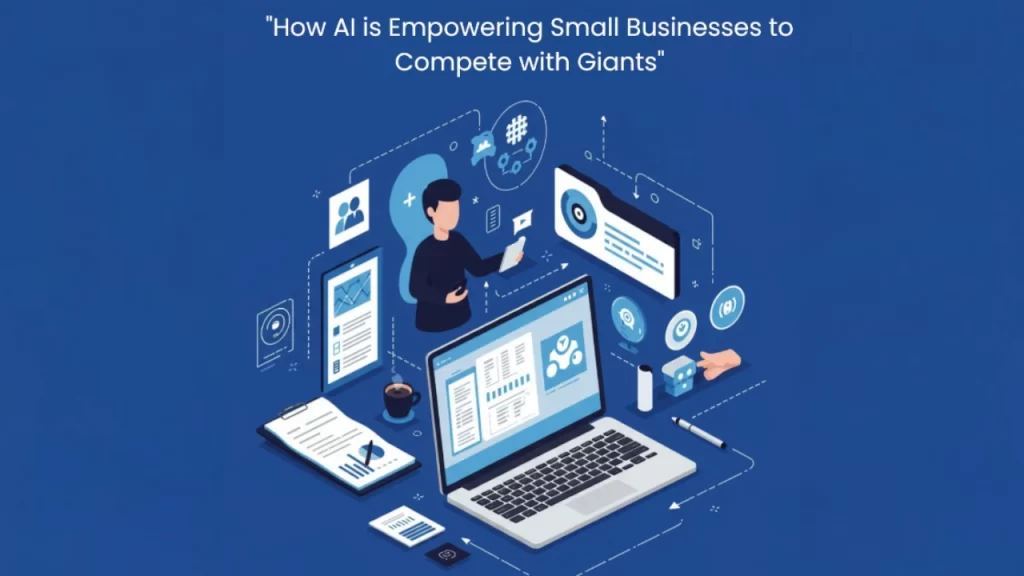
In today’s fast-paced digital world, technology isn’t just for tech giants anymore. Artificial intelligence (AI) has emerged as the great equalizer, empowering small businesses to compete, innovate, and scale like never before.
Gone are the days when only billion-dollar corporations could afford cutting-edge tools or data-driven strategies. From marketing automation to predictive analytics, AI helps small business owners make smarter decisions, reduce costs, and deliver personalized experiences that rival global brands.
Let’s explore how AI is reshaping the competitive landscape and giving small businesses the power to stand shoulder-to-shoulder with industry leaders.
Table of Contents
ToggleThe New Age of Business Intelligence
AI gives small businesses access to the same level of data analysis and insight that once required massive teams and expensive software. Today, entrepreneurs can use simple, affordable tools to:
- Identify emerging market trends
- Predict customer behavior
- Personalize marketing campaigns
- Optimize pricing and inventory
For example, an independent coffee shop can now analyze foot traffic patterns, forecast demand, and send personalized offers to customers—all powered by intelligent automation.
AI turns intuition into precision, giving every decision a data-backed advantage.
Revolutionizing Customer Experience
Customer experience has become the ultimate differentiator, and AI helps small businesses master it effortlessly. Through chatbots, recommendation systems, and predictive analytics, business owners can deliver personalized and timely experiences.
Imagine this:
A local boutique uses AI to send personalized product recommendations based on a customer’s past purchases. That same customer feels understood, valued, and more likely to return.
With AI-driven personalization, small businesses can build deeper relationships that big corporations often struggle to maintain.
Marketing Smarter, Not Harder
Marketing has transformed from guesswork to data-driven precision, and AI is leading that charge.
Today, even the smallest brands can harness AI marketing tools to:
- Automate social media scheduling
- Run predictive ad campaigns
- Analyze engagement and ROI in real-time
- Create targeted email marketing sequences
Instead of spending thousands on agencies or analysts, small business owners can automate repetitive marketing tasks and focus on creativity, storytelling, and strategy.
Tools like HubSpot, Jasper, and Hootsuite (AI-powered versions) allow business owners to reach their audience efficiently—without burning through their budgets.
Enhancing Productivity Through Automation
Time is one of the most valuable assets for small business owners. AI automation helps reclaim it.
With AI-powered systems handling inventory tracking, scheduling, accounting, and data entry, businesses can redirect their focus toward growth and innovation.
For example:
- Retailers can automate restock alerts.
- Freelancers can generate invoices automatically.
- Restaurants can forecast ingredient needs based on seasonal data.
By automating routine operations, small businesses not only cut costs but also eliminate human errors—improving efficiency across the board.
AI and Competitive Pricing Strategies
Pricing is one of the toughest challenges for small businesses competing with industry giants. Large corporations use massive data systems to dynamically adjust prices based on market conditions.
Now, AI tools make this capability accessible and affordable.
By analyzing competitor pricing, customer demand, and even regional trends, AI enables business owners to:
- Set optimal prices for profitability and competitiveness
- Offer personalized discounts
- React instantly to market fluctuations
This data-driven agility gives small businesses the flexibility to stay competitive without sacrificing margins.
Smarter Hiring and Talent Management
Finding and retaining the right talent can make or break a business. AI simplifies this process by helping small companies identify the best candidates faster.
Through intelligent screening tools, businesses can analyze resumes, match skill sets, and even predict cultural fit. Some systems also provide insights into employee performance and engagement.
This means small businesses can build stronger teams and reduce the cost and time of hiring—something previously only big corporations could do efficiently.
AI-Powered Financial Decision Making
Finances often determine whether a small business thrives or struggles. AI-driven financial tools bring clarity and foresight into cash flow, budgeting, and forecasting.
For example, AI can:
- Predict seasonal revenue fluctuations
- Identify cost-saving opportunities
- Detect potential risks before they become major issues
Apps like QuickBooks Advanced and Float integrate AI to give small business owners real-time insights into their financial health, helping them make confident, informed decisions.
Leveling the Playing Field in E-Commerce
The e-commerce boom has opened endless opportunities, but competition remains fierce. AI gives smaller online retailers a competitive edge through personalization, smart search, and predictive recommendations.
An online craft store, for instance, can use AI to suggest complementary products, optimize ad placements, and enhance customer experience—just like Amazon does, but on a smaller, smarter scale.
By leveraging AI-driven SEO tools, visual search, and automated customer service, small e-commerce businesses can compete globally—without needing a massive infrastructure.
Driving Innovation and Agility
Innovation isn’t just about having resources; it’s about how fast you can adapt. AI fosters agility and innovation, allowing small businesses to pivot faster than large corporations bogged down by bureaucracy.
With predictive analytics, trend forecasting, and consumer sentiment analysis, small business owners can quickly spot opportunities, test new products, and enter markets with data-backed confidence.
This agility is their superpower—and AI amplifies it.
Overcoming Challenges and Barriers
While AI offers immense potential, small businesses still face challenges such as cost, technical knowledge, and integration. However, the market now provides affordable, user-friendly AI tools that require no coding or data science background.
Government programs, startup incubators, and tech companies also offer AI training and grants to help small business owners adopt and adapt these tools effectively.
The key lies in starting small—then scaling smart.
Real-World Examples of AI Empowering Small Businesses
- A local bakery uses AI-driven analytics to forecast demand and reduce food waste.
- A freelance designer leverages AI tools for project management and client outreach.
- A home décor retailer uses image recognition AI to suggest similar products and increase conversions.
These examples show that AI isn’t replacing human creativity—it’s enhancing it. Small businesses that integrate AI into their strategies gain efficiency, personalization, and precision that help them thrive in competitive markets.
The Future: Democratizing Innovation
As AI continues to evolve, its accessibility will expand even further. Emerging tools and platforms are designed with small businesses in mind, ensuring that innovation is no longer limited to corporations.
From voice search optimization to smart CRM systems and predictive content tools, the next wave of AI technology will help small businesses operate leaner, smarter, and faster than ever before.
The playing field isn’t just leveling—it’s tilting in favor of those who embrace intelligent innovation early.
Conclusion: The Smart Business Revolution Has Begun
AI has transformed from a futuristic concept into a powerful ally for small businesses. It bridges the gap between limited resources and limitless ambition.
By integrating AI into daily operations, marketing, and decision-making, small businesses can compete—and even outperform—industry giants in speed, personalization, and adaptability.
The future belongs to businesses that learn, adapt, and leverage technology with purpose. Whether you’re a solopreneur, startup founder, or local shop owner, the message is clear:
👉 Harness the power of AI, and the world becomes your marketplace.
Frequently Asked Questions (FAQs)
What is the biggest benefit of AI for small businesses?
AI helps small businesses save time and money while improving decision-making, customer experience, and productivity.
Can small businesses afford AI tools?
Yes. Many AI solutions are now subscription-based and affordable for startups and small enterprises.
Do I need technical skills to use AI for my business?
Not at all. Most AI platforms today are user-friendly and require no coding or advanced tech skills.
Which business areas benefit most from AI?
Marketing, customer service, inventory management, financial planning, and human resources benefit significantly.
How can small businesses start implementing AI?
Start small—adopt one AI tool for marketing or automation, learn its impact, and gradually expand integration across departments.
✅ Internal Link Suggestion:
Check out our guide on “Digital Marketing Strategies for Small Businesses” for more growth-focused insights.
🌐 External Source:
Visit Small Business Administration (SBA) for resources and grants on digital transformation.